
October 30, 2025
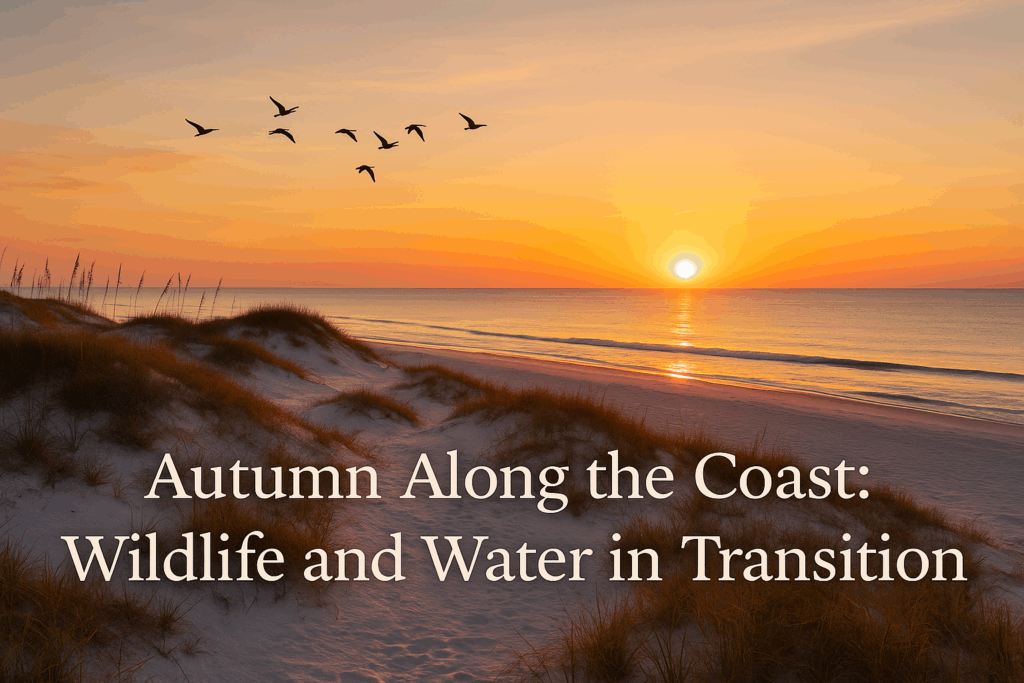
When the Light Turns Gold
Fall on the Emerald Coast doesn’t arrive with a calendar date—it drifts in on the wind.
The light softens, the crowds thin, and the beaches seem to exhale after summer’s rush. What remains is a quieter beauty: warm days, long shadows, and the constant rhythm of the tide against the sand.
For locals, autumn is the coast’s secret season. For wildlife, it’s a time of movement, rebuilding, and change.
The Subtle Shift of the Gulf
The Gulf of Mexico cools slowly, like a living creature settling down to rest. By late September, water temperatures dip from the upper 80s into the mid-70s. The surface loses its heavy shimmer; the clarity improves as plankton blooms fade.
The calmer water invites dolphins closer to shore, where they feed on schools of mullet and menhaden pushed inland by the tide. In the shallows, crabs and rays scuttle lazily between patches of sunlight. Farther offshore, the first cool fronts stir gentle swells that remind beachgoers that winter, eventually, will come.
Fishermen notice the difference first. Spanish mackerel and pompano migrate west, following the temperature line, while redfish move into Choctawhatchee Bay to feed before spawning. The whole ecosystem responds to the tilt of the Earth.
The Skies in Motion
Look up, and autumn writes its story in the air.
Along the dunes and wetlands of South Walton, birdwatchers gather to witness one of nature’s grandest, quietest migrations. Monarch butterflies drift south on invisible highways toward Mexico. Swallows and purple martins gather in clouds above the coastal lakes, swirling in evening thermals before disappearing overnight.
Shorebirds—plovers, sandpipers, and terns—trade nesting territories for warmer latitudes. You can see them on calm mornings, running along the surf line like wind-blown notes of music, stopping briefly to feed before the next flight.
Meanwhile, the marshes behind the dunes come alive with herons, egrets, and ibis hunting in the low water. Their movements are deliberate, patient, almost meditative—echoing the rhythm of the season itself.
The Dunes in Renewal
The towering dunes that protect South Walton’s shoreline spend summer under siege—trampled by crowds, eroded by storms, bleached by heat. Autumn is their recovery period.
Rains bring new life to the sand. Sea oats, now bronze and brittle, scatter their seeds across the ridges. Morning glory vines wither back, making room for winter grasses. The dunes seem to breathe again.
Walk one of the coastal trails through Grayton Beach State Park or Topsail Hill Preserve, and you’ll see the transformation firsthand. The light shifts from white to amber, painting the sea oats in warm tones that photographers chase all season.
This time of year, dune ecosystems repair themselves quietly. What’s lost to summer traffic is gradually reclaimed by wind, rain, and root. It’s the coast’s annual act of resilience.
Choctawhatchee Bay: The Autumn Estuary
Behind the beach, Choctawhatchee Bay becomes a stage for the season’s most intricate performance.
As freshwater inflow from the rivers increases and the air cools, the bay’s salinity drops, creating an ideal environment for juvenile fish, shrimp, and oysters. Blue crabs molt and grow. Seagrass beds thicken. Pelicans dive in slow arcs over glassy water, while ospreys rebuild nests in the tall pines along the shoreline.
At sunset, the bay mirrors the sky in perfect symmetry—copper, violet, and deep indigo—reminding everyone that this is where Gulf and forest meet in an ancient balance.
It’s also a reminder of how fragile that balance is. Storm runoff, careless boating, or overdevelopment upstream can tip the equation quickly. That’s why conservation groups like the Choctawhatchee Basin Alliance use this season to monitor water quality and replant shoreline vegetation. Autumn is their busiest time for restoration, precisely because nature is in recovery mode too.
Life Slows, and Nature Breathes
When the summer heat fades, the pace of everything along the coast changes.
Sea turtles have finished nesting. The last hatchlings scurry toward the Gulf under softer moonlight. The beaches, free from crowds, belong briefly to ghost crabs and shorebirds again.
Even the wind changes personality—less sharp, more constant. Locals call it “the settling wind,” and you can feel it during a quiet evening walk: a steady breeze carrying the scent of salt and pine resin.
It’s the time of year when nature exhales, and so do the people who call this coast home.
The Human Season
Fall in South Walton feels like the coastline returns to itself. Locals reclaim the beach, restaurants hum at a gentler rhythm, and traffic on Scenic 98 actually moves.
This is when neighbors linger at farmers’ markets, when coffee shops fill with familiar faces instead of suitcases. Outdoor concerts at Grand Boulevard and Seaside’s Amphitheater draw smaller but more attentive crowds. Even the ocean seems friendlier—still warm enough for swimming, but calm and clear.
Visitors who come this time of year often find what they didn’t know they were missing: a version of the Emerald Coast that feels personal, unhurried, authentic.
Wildlife in Retreat and Return
As October turns to November, the rhythm of life tightens. Migratory birds head south in earnest, but new visitors arrive from the north: loons, ducks, and pelicans seeking the mild Gulf winter.
The estuaries fill with juvenile fish fattening up before the next spring’s journey. The dunes settle under a blanket of calm. The morning dew thickens. Even the color of the Gulf changes—shifting from bright turquoise to a deep, cool green that reflects the lower sun angle.
On especially still mornings, you can watch schools of baitfish flash just beneath the surface near the snorkel reefs at Miramar Beach. The water looks almost glassy, the air cool enough to carry the scent of pine from the inland forests.
It’s a season that rewards quiet attention.
A Season of Restoration
For conservationists, autumn isn’t an ending—it’s a reset.
Teams repair dune fences, plant native grasses, and restore beach access points worn from summer use. Kayakers collect trash from coastal dune lakes. Student volunteers help reseed marsh grass along the bay.
Every small effort compounds into a larger truth: the coast needs downtime as much as the people who love it.
When the Gulf cools, it slows chemical processes, allowing oxygen levels to rise in the water. Seagrasses rebound. Fish populations stabilize. Even the weather plays its part; steady high-pressure systems bring dry air and long, clear days that let the land heal.
This is the unseen cycle of balance that defines South Walton—wildlife, water, and human rhythm all aligning before the next rush of spring.
How to Experience It
Autumn isn’t a spectator sport here; it’s an invitation.
Walk the trails at Point Washington State Forest, where the air smells of longleaf pine and rosemary.
Paddle one of the coastal dune lakes—Western Lake, Deer Lake, or Eastern Lake—when the reflections are mirror-sharp.
Visit Grayton Beach at sunrise when the surf is soft and the sand still holds the night’s coolness.
Bring binoculars to Topsail Hill to catch the great blue herons and monarchs on their migrations.
No schedule, no noise—just the steady pulse of the Gulf doing what it’s always done: adapt, recover, and begin again.
Frequently Asked Questions
Q: What’s the weather like in South Walton during fall?
A: Days average in the 70s to low 80s, with cooler evenings in the 60s. The humidity drops, making it one of the most comfortable times of year.
Q: Is the Gulf still warm enough for swimming?
A: Yes. Water temperatures stay around 75–78 °F through October, often warmer than the air.
Q: What wildlife can visitors expect to see?
A: Migrating monarch butterflies, ospreys, pelicans, and shorebirds are common. Dolphins, rays, and schools of fish are visible close to shore in calm water.
Q: Why is fall a good time to visit South Walton?
A: Fewer crowds, pleasant temperatures, and clearer water make it ideal for outdoor activities like kayaking, hiking, and photography.
Q: How can visitors support conservation?
A: Respect dune fences, reduce plastic use, join local clean-ups, and support organizations like the Choctawhatchee Basin Alliance and SWARA.