
October 30, 2025
Where Luxury Meets Responsibility
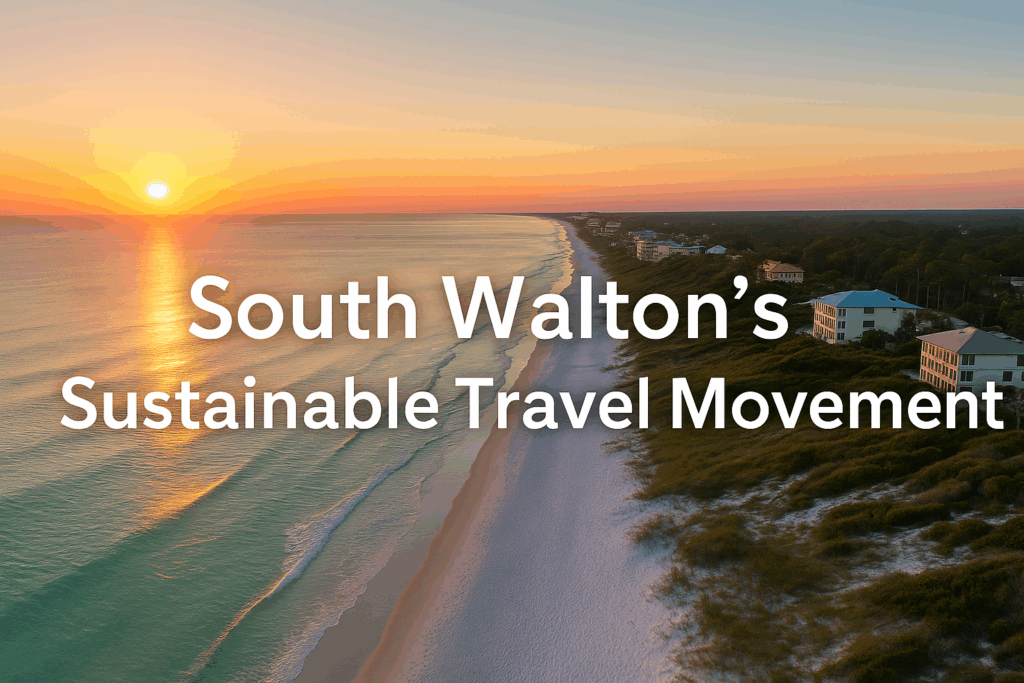
Along the Emerald Coast, where turquoise water meets sugar-white sand, South Walton has become something rare — a beach destination that’s as dedicated to sustainability as it is to serenity.
While other coastal regions wrestle with overtourism and environmental strain, South Walton has built something different: a tourism model where preservation and prosperity work hand in hand.
Here, sustainable travel isn’t a buzzword. It’s a culture — one that’s reshaping the future of Florida’s Gulf Coast.
The South Walton Philosophy: Take Only Memories, Leave Only Footprints
The foundation of South Walton’s sustainable travel movement is surprisingly simple: protect what makes this place special.
Every dune, reef, and dune lake is part of a connected ecosystem that supports both wildlife and human life. And the community has made a collective choice — to protect those systems through smarter tourism.
From green-certified resorts to eco-education programs, South Walton has turned environmental care into an everyday practice. It’s not just about less impact; it’s about better travel.
Green Lodging and Eco-Resorts
Many of South Walton’s hotels, inns, and rental properties are now part of Florida’s Green Lodging Program, a state initiative encouraging energy conservation and water efficiency.
Properties like The Henderson Beach Resort, Tops’l Beach & Racquet Resort, and WaterColor Inn lead the charge with recycling programs, LED lighting, water reuse systems, and partnerships with local conservation groups.
But what makes South Walton’s approach unique is its emphasis on experience. Guests don’t just stay near nature — they participate in it.
- Kayak tours through the coastal dune lakes teach about the fragile balance between fresh and saltwater.
- Resort-led beach cleanups turn small actions into memorable moments.
- On-site native landscaping reduces irrigation needs while restoring natural dune vegetation.
Every visit becomes an act of stewardship.
A Destination Built Around Nature
The geography of South Walton encourages sustainability by design.
With 26 miles of protected shoreline, 15 beach neighborhoods, and an abundance of state parks, it’s a region that thrives on balance rather than expansion.
Places like Grayton Beach State Park, Topsail Hill Preserve, and Deer Lake State Park set the tone. They’re wild but welcoming — offering hiking trails, kayak routes, and interpretive programs that help visitors experience the Gulf without overwhelming it.
Instead of boardwalk malls and endless development, South Walton keeps its focus on low-rise architecture, green spaces, and public access that coexists with natural beauty.
That’s sustainability you can see, not just read about.
The Role of the Local Community
South Walton’s residents aren’t passive observers of conservation; they’re active participants.
Organizations like the Choctawhatchee Basin Alliance (CBA), SWARA, and South Walton Turtle Watch work year-round to protect dunes, reefs, and nesting habitats — and they welcome volunteers from around the world.
- CBA restores oyster reefs and monitors the health of coastal dune lakes.
- SWARA (South Walton Artificial Reef Association) builds and maintains underwater habitats that attract marine life and protect coastlines.
- South Walton Turtle Watch ensures sea turtles nest safely during summer months by patrolling beaches and educating visitors.
These groups show that sustainable travel doesn’t just protect nature — it builds community pride.
The Rise of Eco-Tourism on the Emerald Coast
A new wave of travelers is coming to South Walton, and they’re not looking for high-rises or crowded beaches. They’re seeking authenticity — experiences that connect them to the land and sea.
This shift has fueled an eco-tourism movement that blends recreation with restoration:
- Paddleboard tours across dune lakes teach about estuarine ecology.
- Snorkel trips to the artificial reefs let visitors witness marine life recovery firsthand.
- Birding excursions around Point Washington State Forest highlight rare migratory species.
For South Walton, sustainability isn’t limiting — it’s liberating. It’s creating new industries, new jobs, and new reasons for people to fall in love with the coast.
Sustainable Dining: Local Ingredients, Local Impact
South Walton’s dining scene is another example of sustainability done right. Restaurants are embracing local sourcing, seasonal menus, and reduced waste — not as a marketing gimmick, but as a point of pride.
Fish Out of Water at WaterColor Inn sources directly from Gulf fisheries. Bud & Alley’s in Seaside has served locally caught seafood since the 1980s, long before “farm-to-table” was trendy.
And newer spots like Black Bear Bread Co. and The Perfect Pig emphasize small-scale production, using regional farmers and purveyors.
Supporting these businesses means supporting the entire local ecosystem — from fishermen to farmers to foragers.
Reducing Waste, One Beach Day at a Time
Plastic pollution remains a major global issue, and South Walton is tackling it at the ground level.
Public beach access points now feature recycling bins, cigarette disposal tubes, and signage reminding visitors to “Leave No Trace.”
Reusable water bottle stations are appearing at parks and town centers, while local ordinances discourage single-use plastics during public events.
Community-driven programs like “Hands Across the Sand” and “Trash Bash Saturdays” invite volunteers to help remove debris and restore beach vegetation — combining education with action.
The result? Cleaner beaches, happier wildlife, and a stronger sense of shared responsibility.
Smart Growth and Sustainable Design
Unlike other overbuilt coastal regions, South Walton has kept its skyline low and its footprint light. Zoning laws limit building heights, preserve dune lines, and ensure that development includes green space.
Architectural styles reflect this harmony — coastal cottages and walkable town centers instead of sprawling resorts. The result is an area that feels both intimate and expansive, where nature remains the main attraction.
The master-planned communities of Seaside, Alys Beach, and Rosemary Beach are often cited as examples of “New Urbanism” done right — blending aesthetic design with environmental awareness.
Alys Beach, in particular, sets a new bar for sustainability with LEED-certified buildings, reflective materials that reduce heat absorption, and an underground stormwater system that filters runoff before it reaches the Gulf.
Education as Conservation
One of South Walton’s quiet strengths lies in its emphasis on education.
Visitors can learn about sustainability not from lectures, but through experience.
Interactive exhibits at The Underwater Museum of Art (off Grayton Beach) explain how sculpture reefs double as marine habitats.
Interpretive signage in dune parks teaches about native plants and wildlife.
Even local art galleries, like those in Gulf Place and Seaside, host eco-art installations that inspire awareness through beauty.
This approach — blending creativity and science — turns every walk, swim, and sunset into an opportunity to learn.
The Power of Partnership
None of South Walton’s success happened in isolation. It’s the product of collaboration between government agencies, nonprofits, and private businesses — all recognizing that sustainability is both an environmental and economic necessity.
- Visit South Walton, the area’s tourism bureau, promotes responsible travel through education campaigns and eco-certifications.
- Walton County Environmental Department manages dune restoration, stormwater planning, and habitat protection.
- Local chambers and business associations host green workshops to help companies reduce waste and energy use.
This unity of purpose has transformed South Walton into a prototype for sustainable tourism in the American South.
What Travelers Can Do
Sustainability works best when visitors take part. Here’s how travelers can support South Walton’s efforts:
- Stay in green-certified lodging. Support hotels and rentals that prioritize conservation.
- Shop local. Choose small businesses, artisans, and restaurants that reinvest in the community.
- Use reef-safe sunscreen. Protect marine life by avoiding chemicals like oxybenzone and octinoxate.
- Leave no trace. Pack out what you bring in, especially plastic waste.
- Join a volunteer event. Many organizations host beach cleanups, turtle patrols, or dune restoration days open to visitors.
Travel isn’t just about seeing — it’s about participating.
Frequently Asked Questions
Q: What makes South Walton a leader in sustainable travel?
A: South Walton integrates conservation into every aspect of tourism — from eco-resorts and reef projects to education and waste reduction.
Q: Are there eco-friendly places to stay?
A: Yes. Many resorts are certified by Florida’s Green Lodging Program, including WaterColor Inn and Tops’l Beach & Racquet Resort.
Q: Can visitors take part in environmental programs?
A: Absolutely. Volunteers can join dune replanting, beach cleanups, and turtle patrols organized by local nonprofits.
Q: What are coastal dune lakes, and why are they special?
A: They’re rare freshwater ecosystems found behind dunes that support diverse wildlife. Only a few places on Earth have them, and South Walton protects 15 of them.
Q: How can I make my beach visit more sustainable?
A: Avoid littering, stay off dunes, use reusable containers, and support local conservation efforts.