
October 30, 2025
The Roof Over Paradise
South Walton’s beauty is more than a view — it’s a lifestyle perched between sand and sea. But paradise comes with a price. Every Gulf breeze carries salt that corrodes metal, every summer sun cracks shingles, and every hurricane season tests roofs to their limits.
Living on the coast means your roof isn’t just a design feature — it’s armor. It’s what stands between comfort and catastrophe.
The Climate Challenge
The Emerald Coast is a study in contradictions: calm mornings, brutal storms, and relentless humidity. Roofs here endure a cocktail of forces few other regions face.
Salt Air:
Sea spray carries salt particles that cling to everything — cars, windows, and especially rooftops. Over time, those particles corrode fasteners, flashing, and metal seams. Coastal contractors fight this by using stainless or coated hardware and materials resistant to oxidation.
Intense Sun:
South Walton’s subtropical heat bakes roofs from above and below. UV rays dry out asphalt shingles, and heat-trapped attics can reach over 150°F. Without reflective materials or proper ventilation, the roof’s lifespan shortens dramatically.
Humidity and Rain:
Moisture seeps into every crevice. Algae and mildew thrive, discoloring shingles and eating away at underlayment.
Hurricanes and High Winds:
The real test comes every June through November. Roofs must handle gusts exceeding 120 mph, torrential rain, and flying debris. A roof built for inland Florida won’t survive long here — which is why South Walton’s best builders design for Category 4 conditions by default.
Common Coastal Roofing Issues
Local roofers will tell you: damage here isn’t always obvious. A few missing nails or cracked seals can lead to slow leaks that spread unseen. Common issues include:
- Corroded fasteners and flashing from salt exposure.
- Lifted shingles or tiles after strong wind events.
- Failing sealants and underlayment due to heat cycling.
- Mold growth from trapped moisture in unventilated attics.
- Rust lines along valleys or gutters from oxidized metals.
Small problems here rarely stay small. A coastal roof ignored becomes a roof replaced.
Why Metal Roofing Dominates in South Walton
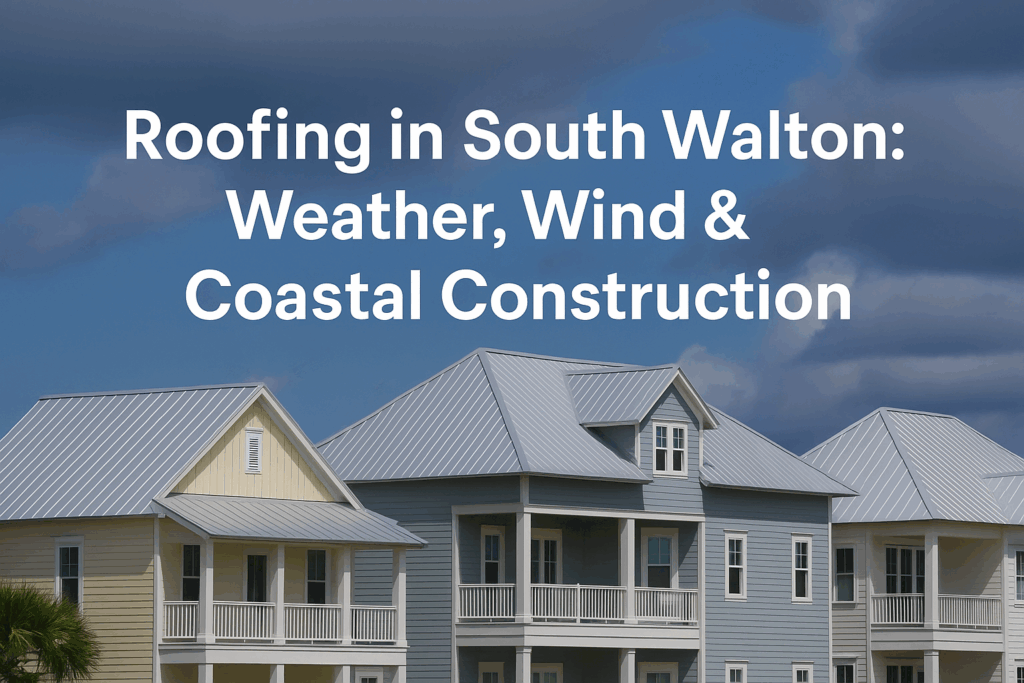
If there’s one material that defines modern coastal construction, it’s metal. Once reserved for barns and beach pavilions, metal roofing is now the premium choice for South Walton homes — sleek, sustainable, and built to survive the Gulf.
Metal roofing offers a trifecta of advantages:
- Corrosion Resistance: Aluminum and galvalume panels are engineered to withstand salt exposure without rusting, making them ideal for seaside neighborhoods like Seagrove or Miramar Beach.
- Wind and Storm Strength: Properly installed standing-seam systems are rated for wind speeds over 140 mph — more than enough to weather a hurricane.
- Energy Efficiency: Reflective coatings bounce sunlight, keeping homes cooler and lowering AC costs through the brutal summer months.
- Longevity: While asphalt shingles may last 15–20 years here, a well-maintained metal roof can exceed 40 years.
Local experts such as Timberman Roofing specialize in designing and installing these high-performance metal systems specifically for the Emerald Coast’s coastal conditions. Their standing-seam and aluminum panels are built to handle salt air, heat, and storm winds — a combination few materials can match.
It’s not just durability — it’s design. South Walton’s pastel cottages and modern beach homes use metal roofs to tie coastal charm with clean, contemporary lines.
The Role of Building Codes and Local Expertise
Roofing in South Walton isn’t a do-it-yourself project — not because it’s complicated, but because the regulations are serious.
Walton County follows Florida’s strict coastal codes, requiring enhanced fastening systems, hurricane clips, and peel-and-stick underlayments.
A licensed local roofer knows how to:
- Use corrosion-resistant fasteners that meet coastal code.
- Choose materials rated for local wind zones.
- Ensure correct ridge venting to prevent moisture buildup.
- Properly secure roof decking to resist uplift.
The right contractor doesn’t just install a roof — they engineer a defense system that passes both inspection and time.
Roofing Materials That Work on the Emerald Coast
While metal leads the way, other materials still hold their place:
Architectural Asphalt Shingles:
Affordable and attractive, these work well inland or for homes slightly away from direct ocean exposure. Premium brands rated for 130 mph winds can still perform reliably when properly nailed and sealed.
Clay or Concrete Tile:
Popular in upscale communities, tile reflects heat and resists rot, though it’s heavier and requires reinforced framing.
Synthetic Slate and Shake:
Composite materials that mimic natural textures while resisting UV damage, salt, and mold. These are increasingly popular for high-end coastal homes seeking style without fragility.
Reflective “Cool Roof” Systems:
Lighter-colored finishes, reflective membranes, and radiant barriers improve energy efficiency — vital in homes with sun-exposed attics.
Storm Season Strategy: Preparation Over Repair
The smartest homeowners don’t wait for storm damage; they prepare for it. Coastal roofs should get inspected twice a year — once before hurricane season and once after.
A proper inspection includes checking:
- Shingle adhesion and nail security.
- Sealant and flashing integrity.
- Ridge and eave vents for salt buildup.
- Gutter drainage and downspout flow.
- Attic moisture or insulation damage.
Proactive maintenance can extend a roof’s lifespan by a decade or more. Many local companies offer annual maintenance packages that include cleaning, corrosion checks, and post-storm evaluations.
Sustainability in Roofing
Sustainability is no longer a luxury buzzword; it’s practical economics.
Metal roofs are 100% recyclable at the end of their life and often made from recycled materials to begin with. Reflective coatings reduce home energy use and carbon output.
Timberman Roofing and other coastal specialists are embracing energy-efficient underlayments and solar-ready systems, helping homeowners balance durability with environmental awareness.
In a region where nature provides both livelihood and lifestyle, sustainability isn’t optional — it’s the rule.
Maintenance: The Long Game
Salt air doesn’t take days off — neither should your maintenance plan.
Keep your coastal roof in shape by:
- Rinsing metal panels annually to wash off salt and debris.
- Clearing gutters and valleys to prevent standing water.
- Checking paint or finish coatings for chips or corrosion.
- Ensuring attic ventilation remains open and clean.
- Scheduling a professional inspection after major storms.
Metal roofs in particular thrive on gentle care — a soft wash and reseal every few years can easily double their service life.
How Roofing Shapes the Coastal Look
In South Walton, a roof isn’t just protection — it’s personality.
A gleaming silver standing-seam roof defines modern Miramar builds. Terracotta tile crowns Mediterranean homes in Alys Beach. Weathered gray shakes top the classic cottages of Seaside.
Each choice reflects not just style, but survival. These roofs don’t compete with nature — they adapt to it. That balance between form and function is the essence of coastal design.
Frequently Asked Questions
Q: Why is metal roofing so popular in South Walton?
A: Metal roofs handle salt, sun, and storms better than most materials. They last longer, reflect heat, and stand up to hurricane-force winds.
Q: How often should I inspect my roof?
A: Twice yearly — once before hurricane season and once after. Storm debris, wind uplift, and corrosion can all worsen if unnoticed.
Q: Are metal roofs noisy during rain?
A: Modern metal roofs include insulated decking and underlayment that dampen sound, often making them quieter than asphalt systems.
Q: What’s the biggest mistake homeowners make?
A: Delaying small repairs. A missing shingle or cracked seal can lead to leaks that rot decking or insulation.
Q: How can I choose the right local roofer?
A: Look for experience with coastal materials and weather — and pick established local companies like Timberman Roofing who understand South Walton’s codes and conditions.